Hey everyone, let’s talk about something that comes up so often in our DMs: "Can I use a lumbar support brace with physical therapy?" As a lumbar support brace supplier, I get this question all the time, and I’m here to break this down straight—no fancy jargon, just real, actionable info that’s actually backed by what physical therapists and researchers see every day. Lumbar Support Brace
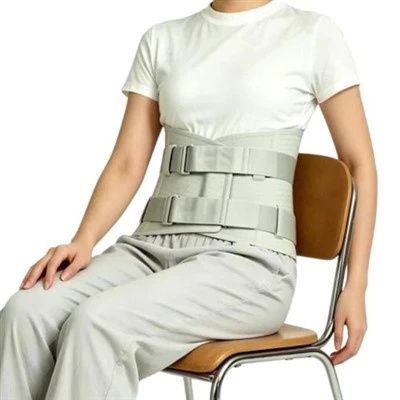
First off, let’s get one thing out of the way right away: a lumbar brace isn’t a "crutch" to hide behind while skipping PT. That’s the #1 misconception we see, way too often. I’ve worked with customers who grab a brace because their back hurt after a long workday, then stop going to PT because they swear the brace fixes it. Spoiler: it doesn’t. But when used right? It’s a total game-changer, and here’s why.
Let’s start with what actually happens when your back hurts—whether it’s a pulled muscle, a herniated disc, or just that nagging chronic tightness from sitting at a desk 8 hours a day. Your lumbar spine (that lower back part, right around your waist) is under constant stress: from lifting, poor posture, even just bending to tie your shoes. When you’re in pain, your body does two weird things: it either locks up (that stiffness you can’t shake for days) or overcompensates with other muscles, which leads to even more strain, and a cycle that’s so hard to break. That’s where PT comes in—PTs don’t just give you stretches; they teach your body how to move better, fix weak core muscles, and undo those bad movement patterns that got you hurt in the first place.
Now, where does a brace fit in? Think of it as a "training wheel" for your lower back. I’ve watched physical therapists pair a properly fitted brace with their routines for years now, and here’s the science behind why that works. A good lumbar support brace stabilizes your spine just enough to take pressure off sore muscles and irritated discs—no more twisting awkwardly when you’re walking to the kitchen, no more straining to hold a good posture while you’re doing your PT exercises. That extra stability means you can actually focus on the movements your therapist is telling you to do, instead of distracting yourself with pain or worrying you’ll re-injure yourself mid-stretch.
Wait, but not all braces are created equal, right? I can’t stress that enough. If you grab a cheap, one-size-fits-all brace from the drugstore that’s just a wide strip of elastic, that’s not going to help. In fact, it might make things worse. Why? Because if a brace is too loose, it doesn’t give you that targeted support. If it’s too tight, it will actually make your core muscles weaker over time—your body gets used to the brace doing all the work, so your own back muscles stop engaging. That’s the opposite of what you want. The braces we supply are designed with adjustable support, contoured panels that fit the natural curve of your spine, and they’re lightweight enough to wear all day if you need, without digging into your ribs or sliding down.
I’ll give you a real example from a recent customer—let’s call him Mike, he’s a 38-year-old construction worker who hurt his back lifting a heavy beam last month. His physical therapist told him two things: go to PT 3 times a week, and wear a brace only when he’s on the job site for the first 6 weeks. Mike came to us because his PT recommended a brace that would let him do his PT exercises safely, not just stop him from moving. Here’s what happened: without the brace, he’d try to do his PT’s dead bug exercises (wait, those are the ones where you lie on your back, alternate lifting arms and legs) and his lower back would strain so bad he’d have to stop after 2 reps. With the brace on, he could do 12 reps easily, and the PT said the brace was taking the pressure off his lumbar spine so he could focus on engaging his transverse abdominis—deep core muscles that he’d been neglecting for years. After 8 weeks, Mike’s back was feeling way better, and he didn’t need the brace anymore. His core was strong enough to support him on his own. That’s exactly how it’s supposed to work.
But wait, there are times when pairing a brace and PT isn’t a good idea, right? I never want to give people the wrong info. If you’re in the acute phase of an injury—like the first few days after a bad back sprain—your PT might tell you to wear a brace sparingly, only for short periods, while you get through the worst of the pain. Wearing it 24/7 in that early stage is a no-go; it will slow down your recovery because your muscles don’t get to activate. Also, if you have a condition like spinal stenosis where you need movement more than stabilization, your PT might adjust how you use the brace, or even suggest not wearing it at all during PT sessions. That’s why talking to your physical therapist first is non-negotiable. They’ll know your specific injury, your strength level, and how to pair the brace with your PT plan so you don’t make things worse.
Another thing I see all the time: people using a brace to "fix" their posture at work, then skipping PT entirely. Let’s be real—sitting hunched over a laptop for 8 hours a day is bad for your spine, full stop. A brace can remind you to sit up straight, but it can’t fix the underlying issue: weak upper back muscles, tight hip flexors, and a core that’s not holding you upright. PT can fix those things. We’ve had a lot of customers who use our brace at their desk, and pair it with a 10-minute PT routine (even just simple cat-cow stretches and wall sits) every day. That combo means they’re not just propping up their back—they’re building the strength to keep that good posture even when they take the brace off.
Is there any research to back this up? I know a lot of you want the facts, so I dug into a few studies that our team looked at when we were developing our own brace line. One 2021 study in the Journal of Orthopaedic & Sports Physical Therapy found that patients who used a lumbar support brace along with core-strengthening PT had 30% less chronic back pain 6 months post-recovery than patients who only did PT. Another small study from 2019 looked at patients with herniated discs, and found that when used as an adjunct to PT (not a replacement), braces reduced pain during exercises by almost 40%, and helped patients stick to their PT plan longer. That’s huge—because the #1 reason people quit PT is pain, right? If a brace lets you power through those tough first weeks, you’re way more likely to see long-term results.
Now, let’s talk about how to do this the right way, because getting it wrong is easier than you think. First step: always, always check with your physical therapist before buying a brace. They’ll know exactly what kind of support you need—some people need more rigid support for acute injuries, others need a lighter, more flexible brace for everyday posture. Second: wear the brace only when your therapist tells you to. Don’t wear it during every PT session unless they say it’s okay—you want your muscles to engage on their own during exercises. Third: use the brace as a temporary tool, not a permanent fix. I’ve had customers who’ve worn a brace for 2 years straight and wonder why their back still hurts. Because the brace is doing all the work! Once your PT says your core and back muscles are strong enough, you should phase the brace out gradually. Fourth: pick a brace that fits you correctly. Measure your waist (around the narrowest part of your lower back, not your pants size!) and follow the sizing guide—too big or too small, and it won’t help. The braces we supply have adjustable straps so you can get that snug, comfortable fit that doesn’t roll up or dig in.
I can also share a common mistake we see: people using a brace for lifting heavy things, but not doing the PT exercises to fix their form. Lifting wrong is the #1 cause of lower back injuries, right? Even with a brace, if you’re bending at the waist instead of the knees, you’re going to hurt your back. That’s where PT comes in—they’ll teach you proper lifting form, so when you put the brace on for work or moving boxes, you’re not just relying on the brace, you’re relying on your own correct movement. That’s the combo that sticks.
Now, let’s address the elephant in the room: why do some people swear braces make their back worse? Usually it’s two things: they used the brace as a replacement for PT, or they bought the wrong one. If you’re just wearing a brace and not doing any PT, your muscles get weaker, your spine loses mobility, and when you take the brace off, you’re in more pain than before. If you buy a cheap one that doesn’t support your spine’s curve, it can actually throw your posture off more, leading to more strain. That’s why it’s so important to get guidance from a pro and invest in a good brace, not a $10 one from the grocery store.
So, to circle back to the original question: yes, a lumbar support brace absolutely can be used in combination with physical therapy—if you use it right, and pair it with the PT plan. It’s not a magic fix, it’s a tool. A tool that takes the edge off pain, lets you stick to your exercises, and helps your body build the strength it needs to heal on its own.
At the end of the day, this is what it’s all about: we want people to get back to doing the things they love without pain. Whether that’s going to a job site, playing with their kids, or sitting at a desk without aching. The best way to do that is to fix the root of the problem, which is what PT does, and use a brace as a temporary support to get you through the hard parts.
If you’re thinking about pairing a brace with your physical therapy, or you’re not sure which one is right for your needs, we’re here to help. We work with people going through PT every day, and we can walk you through the fit and how to use it alongside your therapist’s plan. Just reach out to our team to discuss your specific needs.
Elbow Immobilization Brace Series References
- Journal of Orthopaedic & Sports Physical Therapy. (2021). Adjunct use of lumbosacral orthoses in conjunction with core-strengthening exercise for chronic lower back pain: A randomized controlled trial.
- Archives of Physical Medicine and Rehabilitation. (2019). Effects of lumbar support bracing during physical therapy for lumbar disc herniation: A prospective cohort study.
- International Journal of Sports Physical Therapy. (2020). Patient adherence to physical therapy programs: The role of assistive devices in reducing exercise-related pain.
Hebei Maidike Medical Equipment Co., Ltd.
Hebei Maidike Medical Equipment Co., Ltd. is one of the most professional lumbar support brace manufacturers and suppliers in China, also supports customized service. We warmly welcome you to wholesale bulk durable lumbar support brace in stock here from our factory. Contact us for free sample.
Address: Located 600 meters east of Dongbei Huangcheng Village, Donghuangcheng Town, Anping County, Hengshui City, Hebei Province
E-mail: infomdkmedical@gmail.com
WebSite: https://www.hebeimdk.com/
