Can air classifiers be used for graphite powder classification?
As a supplier of air classifiers, I am frequently asked about the compatibility of our equipment with various materials. One question that comes up quite often is whether air classifiers can be used for graphite powder classification. In this blog, I will delve into this topic, exploring the properties of graphite powder, the working principles of air classifiers, and the advantages of using air classifiers for graphite powder classification. Air Classifiers
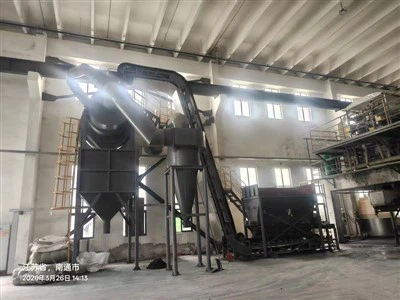
Properties of Graphite Powder
Graphite is a form of carbon with a hexagonal crystal structure. It is characterized by its lubricity, high thermal and electrical conductivity, chemical stability, and high melting point. Graphite powder is widely used in various industries, including battery manufacturing, lubricants, refractories, and electronics.
The properties of graphite powder can vary significantly depending on its source, particle size, and purity. Particle size is a crucial factor in determining the performance of graphite powder in different applications. For instance, in lithium-ion batteries, the particle size of graphite powder affects the battery’s capacity, charge-discharge rate, and cycle life. Therefore, precise classification of graphite powder according to particle size is essential to meet the specific requirements of different industries.
Working Principles of Air Classifiers
Air classifiers are devices that use air flow to separate particles based on their size, shape, and density. The basic working principle of an air classifier involves introducing a stream of particles into a classification chamber, where they are subjected to the action of an air flow. The air flow carries the smaller and lighter particles upwards, while the larger and heavier particles fall downwards.
There are several types of air classifiers, including centrifugal air classifiers, inertial air classifiers, and jet air classifiers. Centrifugal air classifiers are the most commonly used type for powder classification. In a centrifugal air classifier, the particles are introduced into a rotating classification wheel. The centrifugal force generated by the rotating wheel causes the larger particles to move towards the outer edge of the wheel and be discharged as coarse particles, while the smaller particles are carried by the air flow through the wheel and are collected as fine particles.
Advantages of Using Air Classifiers for Graphite Powder Classification
-
High Precision Classification
Air classifiers can achieve high-precision classification of graphite powder. They can separate particles in a narrow size range, ensuring that the classified graphite powder meets the strict particle size requirements of different applications. For example, in the battery industry, air classifiers can produce graphite powder with a uniform particle size distribution, which is crucial for improving battery performance. -
Gentle Classification Process
The classification process in air classifiers is relatively gentle, which helps to preserve the physical and chemical properties of graphite powder. Unlike some mechanical classification methods that may cause particle breakage or surface damage, air classifiers use air flow to separate particles, minimizing the risk of particle degradation. This is particularly important for graphite powder, as any damage to the particles can affect its performance in applications. -
Continuous Operation
Air classifiers can operate continuously, allowing for high-volume production of classified graphite powder. This is beneficial for industries that require large quantities of graphite powder, such as the refractory and lubricant industries. Continuous operation also improves the efficiency of the production process, reducing production costs. -
Easy to Adjust
The classification parameters of air classifiers, such as the air flow rate, classification wheel speed, and feed rate, can be easily adjusted to achieve different classification results. This flexibility allows for the production of graphite powder with different particle size distributions according to the specific requirements of customers.
Application Cases in Graphite Powder Classification
Many industries have successfully used air classifiers for graphite powder classification. In the battery industry, for example, air classifiers are used to produce high-quality graphite powder for lithium-ion batteries. The classified graphite powder has a uniform particle size distribution, which improves the battery’s charge-discharge efficiency and cycle life.
In the lubricant industry, air classifiers are used to classify graphite powder to ensure that it has the appropriate particle size for use as a lubricant additive. The classified graphite powder can provide better lubrication performance, reducing friction and wear in mechanical systems.
Challenges and Considerations
While air classifiers offer many advantages for graphite powder classification, there are also some challenges and considerations that need to be addressed. One challenge is the presence of fine particles and dust in the graphite powder. These fine particles can cause clogging in the air classifier and affect its performance. To overcome this challenge, it is necessary to use appropriate dust collection systems and pre-treatment methods to remove the fine particles before classification.
Another consideration is the moisture content of the graphite powder. High moisture content can cause the particles to agglomerate, making it difficult to classify them accurately. Therefore, it is important to ensure that the graphite powder has a low moisture content before classification.
Conclusion
In conclusion, air classifiers can be effectively used for graphite powder classification. They offer high precision, a gentle classification process, continuous operation, and easy adjustment, making them suitable for a wide range of applications in the graphite powder industry. However, it is important to address the challenges and considerations associated with graphite powder classification, such as fine particle removal and moisture control, to ensure the optimal performance of the air classifier.
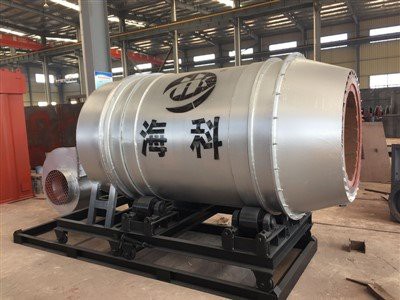
If you are in need of high-quality air classifiers for graphite powder classification or have any questions about our products, please feel free to contact us for procurement and detailed discussions. We are committed to providing you with the best solutions and services to meet your specific needs.
Dust Collectors References
- "Particle Size Analysis: Principles, Practices, and Techniques" by Terence Allen
- "Powder Technology Handbook" edited by Tadao Tanaka
- Industry reports on graphite powder applications and processing technologies
Jiangsu Haike Environmental Tech Co., Ltd.
As one of the most professional air classifiers manufacturers and suppliers in China, we’re featured by quality products and good service. Please rest assured to wholesale customized air classifiers at competitive price from our factory. Contact us for quotation.
Address: No.1, Wei’er Branch Road, Shanggang Industrial Park, Jianhu County, Yancheng City, Jiangsu Province, China
E-mail: 17388487000@163.com
WebSite: https://www.jshkhbwm.com/
