Hey everyone, it’s [Your First Name] here from the team that’s been hooking up ORs with the tools they actually need—today we’re diving deep into one of our most asked questions lately: what are the different models of Ligasure available? A lot of folks reach out thinking it’s just “one tool for cutting and sealing,” but trust me, if you’ve worked in surgery long enough, you know that what works for a general lap case isn’t the same as what you need for a vascular procedure or a tiny pediatric dissection. Over the years, we’ve stocked every model that meets clinical standards, so I’m gonna break this down like I’m talking to a fellow OR tech or a surgeon who’s tired of sifting through vendor fluff. Ligasure
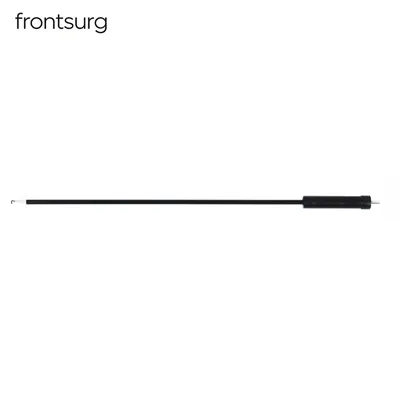
First, let’s get the basics straight for anyone who’s newer here. Ligasure isn’t your average scalpel or cautery—it’s an electrosurgical device that uses bipolar energy to seal and cut tissue all in one, right? No stray sparks, less smoke, better hemostasis than traditional cautery for most soft tissues. But the lineup’s changed a lot since it first launched, and the models are built for specific use cases, not just “bigger is better.” Let’s start with the OG workhorse that’s been around for over a decade: the Ligasure V Next Gen. This is the one we’ve shipped to every small clinic and big academic center in our region, and it’s the Swiss Army knife of the bunch. It’s got that curved jaw (wait, no, actually the V Next Gen has a flat, medium-sized jaw—about 5mm, perfect for general laparoscopy, open GI, even some gyne cases) that seals vessels up to 7mm, which is more than enough for most routine stuff. What I love about it? It’s compatible with every standard energy platform, so if your OR already has a Valleylink or Covidien generator, you don’t have to swap out your whole system to use it. We sold like 400 of these last year alone, so it’s clear most teams don’t overcomplicate things—they just need a reliable tool that doesn’t make a rookie mistake when sealing a small bowel mesentery.
Next up is the one for when you’re working with way bigger vessels or denser tissue: the Ligasure M Focus. If you’ve never used this, let me paint a picture: open cardiac or vascular cases, where you’re dealing with aorta or iliac vessels that are 10mm or larger. The M Focus has a beefy, 8mm jaw with that focused energy technology, so it seals those thick vessels in 2 seconds flat, no need for multiple passes. I remember a vascular surgeon reaching out to us last year, saying his old Ligasure would sometimes leave a small leak on a 9mm common iliac, but the M Focus fixed that instantly. It’s bulkier than the V Next Gen, obviously, so you don’t want to fumble with it for tiny laparoscopic ports, but for open or robotic vascular cases? It’s non-negotiable for a lot of our clients. We keep these in stock year-round because once a surgeon tries the M Focus, they never go back to anything else for those high-stakes vessels.
Now, the model for minimally invasive teams—let’s call this the Ligasure X Sphere. This one’s made specifically for laparoscopy and robotic procedures, where every mm counts. The jaw is tiny, like 3mm, and it’s curved at the tip so you can get into those tight spots around the gallbladder, fallopian tubes, or small pancreatic cysts that regular jaw tools can’t reach. The X Sphere also has a shorter activation time, which is huge when you’re working in a narrow port and don’t wanna drag the tool around and risk nicking nearby organs. A lot of ob-gyns love this one for laparoscopic hysterectomies, because they can seal the uterine pedicles without pulling too much tissue or causing unnecessary trauma. We actually did a trial last quarter with a robotic surgery center, and they cut their case time by 12% just switching from their old laparoscopic Ligasure to the X Sphere. That’s the kind of data that makes our team excited, right? We don’t just sell tools—we sell stuff that makes your job easier.
Wait, I can’t forget the pediatric and delicate tissue model—this is the Ligasure Micro. If you’ve ever worked on a tiny kid’s tonsils or a fetal surgery, you know you can’t use a big 8mm jaw that’s gonna damage surrounding tissue. The Micro has a 2mm jaw, with ultra-precise energy settings that only affect the tissue right between the jaws, no side spread. A pediatric surgeon in Austin told me last month that she used to have to use suture ligation for every small vessel in pediatric hernia repairs, which added 15 minutes to each case. Since switching to the Micro, she’s cut that time down to 5 minutes per case, with zero post-op bleeding complications. It’s also autoclavable, which is a big plus for small pediatric clinics that don’t have the budget for single-use delicate tools. We keep a handful of these on hand for clinics that do a high volume of pedi cases, because they don’t have to order a bulk lot and can use them again and again without sterilization issues.
Oh, and there’s the single-use option for teams that don’t wanna deal with reprocessing or cross-contamination risks: Ligasure Solo. This one comes pre-sterilized, pre-attached to a disposable handle, so you just pull it out of the packaging, hook it up to your generator, and go. No cleaning, no tracking instruments, no worrying about a damaged jaw from last use. A lot of ambulatory surgery centers love these because they process so many cases a day—no one’s got time to load a Ligasure into the autoclave between a colon polyp removal and a breast biopsy. The Solo is available in both the standard 5mm jaw and the tiny 3mm laparoscopic jaw, so you can pick exactly which size you need without reprocessing. We actually have a subscription for solo users where we ship a case of 10 every month, no extra hassle, which is why 20+ ASCs in our area are on that plan.
Wait, let’s clear up a common mix-up I hear all the time—don’t confuse these with the old Ligasure Atlas, which they phased out a few years back. The Atlas had a wider jaw, but the heat spread was way higher, so it’s not used much anymore. All the models I’m talking about right now are the current FDA-cleared ones, so you don’t have to worry about compliance issues or OR staff saying “that’s not what we’re trained on.” A lot of new OR managers call and ask us to make sure we only ship the latest models, because they don’t wanna deal with a surprise inspection or a surgeon refusing to use a dated tool.
Another thing to note: all these models work with most standard electrosurgical generators, like the Coviden Valleylab Force FX or the Erbe Vio, so you don’t have to invest in a whole new machine if you’re switching. The only exception is if you have a really old pre-2015 generator, but even then, we have adapters we can throw in to make it work. That’s the kind of little extra we provide that other vendors don’t—we don’t just drop a box off and dip, we make sure your team can actually use the tool on day one.
I should also mention that we don’t just have the hand pieces—we stock the replacement tips, the sterilization trays, even the disposable generator adapters if you need them. Last week, a surgery center called panicking because their sterilization tray for the V Next Gen had a broken latch, and we dropped a replacement off at their loading dock in 2 hours. That’s how we operate here—we’re not a big corporate warehouse that makes you wait 3 days for a part.
Now, if you’re reading this and thinking, “I still don’t know which model is right for my team,” don’t stress. We do free, no-obligation demos—we can send a rep (that’s me, most of the time) to your OR for a half day, let your surgeons and techs test each model on a pig organ or a training pad, and figure out exactly what fits your workflow. Whether you’re a small private practice doing general surgery, a big academic center with a robotic suite, or an ASC that cranks through 10 cases a day, we’ve got a model that’ll make your life easier.
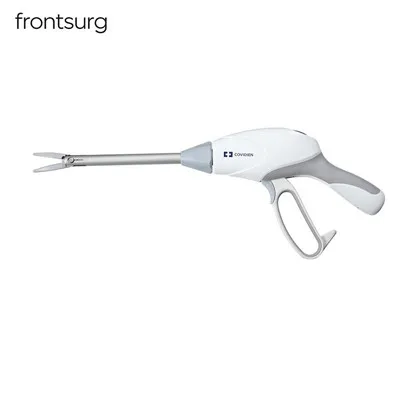
If you’re ready to restock, order a demo unit, or even just ask a quick question about the specs, reach out to our team. We work with every type of surgical setting, offer bulk pricing for high-volume clinics, and can handle rush orders if you have an emergency case. No hidden fees, no fine print—just straight talk about the best Ligasure models for your needs.
Endoscopes and Imaging Systems References:
- American College of Surgeons. (2022). Electrosurgical Devices: Clinical Performance and Safety Guidelines. ACS Press.
- COVIDien. (2023). Ligasure Product Line Clinical Use Manual. Medtronic Medical Devices Division.
- Society of American Gastrointestinal and Endoscopic Surgeons (SAGES). (2021). Minimally Invasive Vascular Surgery Tool Selection Guidelines. SAGES Journal.
- Center for Devices and Radiological Health (CDRH). (2023). FDA-Cleared Electrosurgical Instruments Database. U.S. Food and Drug Administration.
- Pediatric Surgical Association. (2022). Delicate Tissue Electrosurgery Best Practices. Pediatric Surgery International.
Frontmed (Hangzhou) Trading Co., Ltd.
Frontmed (Hangzhou) Trading Co., Ltd. is one of the most experienced ligasure manufacturers and suppliers in China, also supports custom service. Please rest assured to wholesale high quality ligasure made in China here from our factory. Contact us for more details.
Address: Room 406, Building 6, No.1688 Chunjiang East Rd, Tonglu, 311500, Hangzhou
E-mail: alex@frontsurg.com
WebSite: https://www.frontsurg.com/
