As a cushioning paper supplier, I’ve always been fascinated by the origin of the product we offer. Cushioning paper, a staple in the packaging industry, has a rich and storied history that dates back centuries. In this blog post, I’ll take you on a journey through time to explore the origins of cushioning paper, its evolution, and its importance in modern packaging. Cushioning Paper
The Early Beginnings
The concept of using paper for cushioning purposes can be traced back to ancient China. Around 200 BC, the Chinese invented paper, which was initially used for writing and painting. However, they soon discovered that paper could also be used to protect fragile items during transportation. They would wrap delicate objects in layers of paper to prevent them from breaking. This early form of cushioning paper was made from mulberry bark, hemp, and other plant fibers.
In the 13th century, paper-making techniques spread to Europe through trade routes. As paper became more widely available, it began to be used for packaging and cushioning. Merchants would use paper to line crates and boxes to protect their goods from damage during shipping. This practice continued to evolve over the centuries, with the development of new paper-making technologies and the increasing demand for packaging materials.
The Industrial Revolution and the Rise of Modern Cushioning Paper
The Industrial Revolution in the 18th and 19th centuries brought about significant changes in the paper-making industry. New machines and processes were developed, allowing for the mass production of paper. This led to a decrease in the cost of paper, making it more accessible for packaging and cushioning purposes.
One of the key developments during this period was the invention of corrugated paper. In 1856, Englishman Edward Allen patented a process for making corrugated paper, which consisted of a layer of fluted paper sandwiched between two flat sheets. This design provided excellent cushioning properties and was soon adopted for packaging purposes. Corrugated paper quickly became the standard for shipping and packaging, revolutionizing the industry.
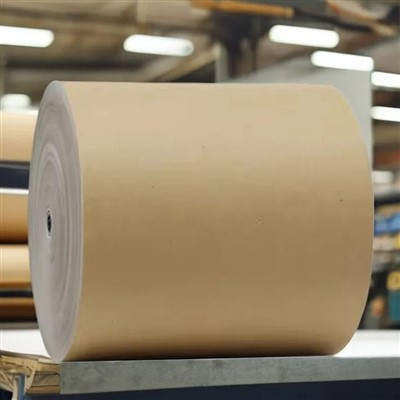
Another important innovation was the development of kraft paper. In the late 19th century, Carl F. Dahl, a German chemist, invented the kraft pulping process, which used sodium hydroxide and sodium sulfide to break down wood fibers. This process produced a strong, durable paper that was ideal for packaging and cushioning. Kraft paper is still widely used today, due to its strength, flexibility, and recyclability.
The Modern Era: Advancements in Cushioning Paper Technology
In the 20th century, the packaging industry continued to evolve, with the development of new materials and technologies. Cushioning paper also underwent significant advancements, with the introduction of new types of paper and improved manufacturing processes.
One of the most significant developments was the invention of air bubble cushioning. In 1957, Alfred Fielding and Marc Chavannes, two engineers from New Jersey, accidentally created a sheet of plastic with air bubbles trapped between two layers. They initially intended to use it as wallpaper, but soon realized its potential as a cushioning material. Air bubble cushioning quickly became popular for packaging fragile items, due to its excellent shock absorption properties.
Another important innovation was the development of molded pulp cushioning. This involves using recycled paper fibers to create custom-shaped cushions that fit the contours of the product being packaged. Molded pulp cushioning is environmentally friendly, as it is made from recycled materials and is biodegradable. It is also lightweight and provides excellent protection for fragile items.
The Importance of Cushioning Paper in Modern Packaging
Today, cushioning paper plays a crucial role in the packaging industry. It is used to protect a wide range of products, from electronics and glassware to food and pharmaceuticals. Cushioning paper helps to prevent damage during transportation and storage, ensuring that products arrive at their destination in good condition.
In addition to its protective properties, cushioning paper is also environmentally friendly. Many types of cushioning paper are made from recycled materials and are biodegradable, making them a sustainable choice for packaging. This is important in today’s world, where consumers are increasingly concerned about the environmental impact of the products they buy.
Conclusion

The origin of cushioning paper can be traced back to ancient China, where paper was first used to protect fragile items during transportation. Over the centuries, the use of paper for cushioning purposes has evolved, with the development of new technologies and materials. Today, cushioning paper is an essential part of the packaging industry, providing protection for a wide range of products and helping to reduce the environmental impact of packaging.
Kraft Paper for Carton Handles As a cushioning paper supplier, I am proud to be part of an industry that has such a rich history and plays such an important role in modern society. If you are in need of high-quality cushioning paper for your packaging needs, I encourage you to contact us to discuss your requirements. We offer a wide range of cushioning paper products, including corrugated paper, kraft paper, air bubble cushioning, and molded pulp cushioning. Our team of experts can help you choose the right product for your specific needs and provide you with competitive pricing and excellent customer service.
References
- "A History of Paper: From Ancient Times to the Present" by Mark Kurlansky
- "The Packaging Handbook" by Robert J. Crawford
- "Corrugated and Solid Fiberboard Containers: Design and Manufacturing" by George A. Rodrigue
Senzo New Material Group Co., Ltd.
As one of the most professional cushioning paper manufacturers and suppliers in China, we also support customized service. Please rest assured to buy high quality cushioning paper made in China here from our factory. For price consultation, contact us.
Address: Dongying Bonded Area, Shandong, P. R. China
E-mail: info@aonuochina.cn
WebSite: https://www.senzopaper.com/
