Hey there, fellow specifiers, plant managers, and small-batch coil makers – if you’re on this blog, odds are you’ve just unrolled a spool of enameled flat wire and thought, “Wait, is this actually any good?” As a supplier who’s been talking to folks like you for over a decade, I get it: when that crate shows up, you don’t just grab the first spool and bolt to the winding station. You spot-check, test, and maybe even side-eye a little, because bad enameled wire doesn’t just waste time – it ruins coils, burns through production runs, and makes your team look like they didn’t do their homework. Enameled Flat Wire
I’ve seen it a hundred times: a client gets a spool that looks fine on the outside, winds 50 motors with it, and then half fail insulation resistance tests. Or they cut corners on checking coating thickness, only to find out the enamel chips off when they’re bending flat wire into slots, leaving bare copper that shorts out the whole unit. So let’s cut the fluff – no jargon, no fancy formulas, just the real, actionable checks I tell my own customers to run the second their enameled flat wire arrives.
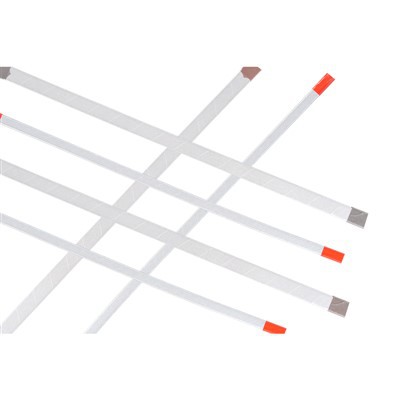
First, let’s start with the obvious but super easy visual checks – because 80% of quality issues pop up before you even touch a tool. Grab a few spools from the crate (don’t just take the first one at the top – the bottom spools sometimes get banged up in shipping) and unroll about a foot of wire. What are you looking for? No snags, right? Wait, more specific: no uneven coating, no tiny pinprick-like holes in the enamel, no discoloration (brown or gray spots mean the enamel cured wrong during manufacturing, which equals weak insulation). Flat wire isn’t round, so pay attention to the edges – if the enamel is thin or chipped right along the sharp corners, that’s a red flag. Those corners are where the insulation gets stretched most when you bend it into a stator slot, so thin coating there is a ticking time bomb. I’ve had a few shipments where the coater machine was misaligned and left one side thinner – you can spot that with a quick visual, no tools needed.
Next, a quick bend test – and I don’t mean “bend it until it breaks.” For flat wire, especially if you’re using it for small transformers or compact coils, bend the wire 180 degrees around a pin that’s the same width as your wire’s flat side. If the enamel cracks or peels off after that, the coating’s too brittle. I had one client last year who skipped this, used wire for 2000 inductors, and 30% failed when their clients did a final bend test – they had to rewind all of them, which cost way more than the 10 minutes they would’ve spent doing that bend check. Pro tip: do this on 5-10 samples, not just one – sometimes a single spool has a defect, but most bad coatings are consistent across a whole run.
Then there’s insulation resistance testing – this is non-negotiable, and it’s not as scary as it sounds. You just need a basic multimeter (the ones most workshops already have) set to the “megohm” setting. Strip a tiny bit of enamel off both ends of a short wire sample, then measure resistance between the two bare copper ends. Wait – no, actually, a better test is to wrap a piece of aluminum foil around the insulated wire (be gentle, don’t scratch the enamel) and connect one multimeter lead to the foil, the other to the bare copper end. The resistance should be at least 1 megohm per volt of your working voltage, but honestly, for most low-voltage coils, anything under 5 megohms means the insulation is porous. Porous enamel lets moisture or chemicals seep in over time, so even if it passes now, it’ll fail in 6 months. I always tell my customers: if this test comes back low, send it back. No excuses.
Coating thickness is another one – you can buy a cheap digital coating thickness gauge for under $100, and it’s worth every penny. Enameled flat wire’s thickness is usually measured in microns, and different applications require different specs: for motors, it’s usually 40-60 microns; for small transformers, 25-40 microns. If the gauge reads less than that, you’re at risk of insulation breakdown. A lot of cheaper suppliers cut corners on thickness to save material, so this is a quick way to call that out. Don’t skip this – I once had a client who thought “thicker is better” and ordered 80-micron wire for a tiny 12V transformer, but they couldn’t wind it into the tight slots because the thick enamel took up too much space. Always check the thickness against the specs you ordered – don’t just go for thick or thin.
Wait, let’s talk about something that’s easy to miss: the copper itself. Enameled wire’s conductor is copper (mostly, unless it’s aluminum, but that’s rare for flat wire these days) so you need to make sure the copper is pure, not oxidized. How? If you strip the enamel, the copper should be bright pink, not dark brown or black. Oxidized copper has higher resistance, which means your coils will run hotter, use more energy, and have shorter lifespans. I’ve seen a shipment where the copper was oxidized because the supplier stored spools in a damp warehouse for months – the wire looked fine on the outside, but stripping it revealed that dark brown oxide. That’s not something you can fix, so that’s a full return right there.
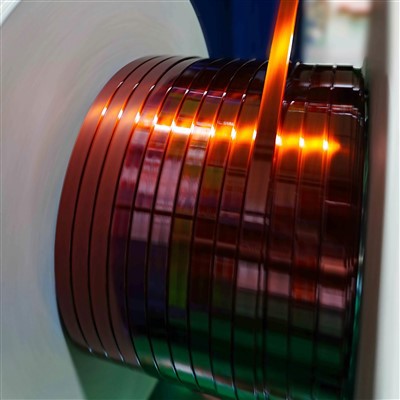
Also, check the spool winding tension. Flat wire has sharp edges, so if it’s wound too tight, you’ll get enamel cracks when you unroll it. If it’s too loose, the wire will shift on the spool and get tangled. Unroll a full 10 feet of wire, check for kinks or loose loops – if there are kinks, that means the winding tension was wrong during manufacturing, and you’ll have a hard time feeding it through your coil winding machine. Another thing: make sure the spool is labeled correctly. I can’t tell you how many times a client has received a spool labeled “AWG 16 flat” but it’s actually AWG 18, which means their coil design doesn’t fit. Check the wire’s cross-sectional dimensions with a caliper – flat wire’s width and thickness should match your order within 0.005 inches. That’s a tiny difference, but it’s enough to mess up your slot fill, leading to lower efficiency.
Let’s be real: sometimes even the best suppliers slip up. I’m not perfect, and I’d rather my clients catch a defect early than waste a whole production run. That’s why I always tell them, when you do these checks, document them. Take photos of any bad spots, note the test results, and reach out – most of the time, a mix-up is just a mistake, and we’ll replace the spool no questions asked. I’ve had clients who waited to test until they had 10 spools wound, and then they came to me and said “half of these are bad” – by then, it’s my fault for not catching it, but it’s also their fault for not checking early.
Wait, let’s talk about a common mistake newbies make: only testing one spool. If you order 50 spools, test 5-10 of them. A single off spool is fine, but if 2 out of 5 have thin coating, oxidized copper, or bad bend test, the whole batch is off. That’s why sampling is key. Also, don’t forget environmental testing if your application is for outdoor or harsh environments – if your coil is going to be used in a garage or a marine setting, you can do a simple humidity test: wrap a sample wire in a damp paper towel for 24 hours, then do the insulation resistance test. If it drops, the enamel isn’t moisture-resistant enough, and you need a different type of coating.
I know this sounds like a lot, but let’s put it in perspective: all these checks take less than an hour for a small batch, and they save you from days of rework, customer complaints, or warranty issues. As a supplier, I’d rather my clients take 15 minutes to check a spool than have to deal with a return or a bad review. That’s why I include a free check list with every shipment – it’s the same steps I just told you, so you don’t have to guess what to do.
At the end of the day, enameled flat wire quality isn’t just about the materials – it’s about how easy it is to work with, how long it lasts, and how it fits your design. If you just unrolled a spool and you’re not sure, don’t hesitate to reach out. We’re not just here to ship wire – we’re here to help you make sure your coils work the way they’re supposed to. Whether you need clarification on a test, a replacement spool, or just want to walk through your application to make sure you’re ordering the right type, we’re happy to chat. Don’t take chances with wire that could ruin your work – a quick check now saves you a lot of headache later.
Flat Litz Wire References:
- Insulated Wire Engineering Handbook, 2nd Edition
- National Electrical Manufacturers Association (NEMA) Standard for Enameled Round and Flat Magnet Wires, 2021
- Copper Development Association: Best Practices for Magnet Wire Inspection, 2020
- Small Motor Manufacturers Association: Quality Control Guidelines for Coil Windings, 2019
Tianjin Jingwei Power Technology Co., Ltd.
As one of the most professional enameled flat wire manufacturers and suppliers in China, we’re featured by quality products and good service. Please rest assured to buy durable enameled flat wire made in China here from our factory. Contact us for more details.
Address: No.1 Chuangxin Rd. Xiaozhan Industrial Park, Jinnan District, Tianjin, China
E-mail: info@jwdc.cn
WebSite: https://www.jw-dcs.com/
