What is the Bend Radius of a Hydraulic Hose?
As a supplier in the hydraulic hose industry, I often encounter customers who have questions about various aspects of hydraulic hoses. One of the most frequently asked questions is about the bend radius of a hydraulic hose. In this blog, I’ll delve into what the bend radius is, why it matters, and how it impacts the performance and lifespan of hydraulic hoses. Hydraulic Hose
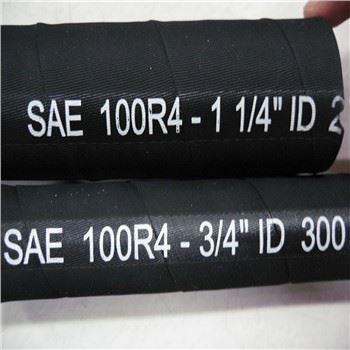
Understanding the Bend Radius
The bend radius of a hydraulic hose refers to the minimum radius at which a hose can be bent without causing damage to its internal structure or significantly affecting its performance. It is typically measured from the centerline of the bend to the center of the hose. For example, if a hose has a bend radius specification of 5 inches, it means that the hose should not be bent in a way that the center of the bend has a radius less than 5 inches.
This specification is not arbitrary. It is determined through rigorous testing and engineering analysis. Hydraulic hoses are composed of multiple layers, including an inner tube, reinforcement layers, and an outer cover. When a hose is bent, these layers are subjected to different types of stress. The inner layer may experience compression, while the outer layer may be under tension. If the bend radius is too small, these stresses can become excessive, leading to problems such as kinking, reduced flow capacity, and even premature failure of the hose.
Why the Bend Radius Matters
- Flow Efficiency: A proper bend radius ensures that the hydraulic fluid can flow smoothly through the hose. When a hose is bent beyond its recommended radius, the internal cross – section of the hose can become restricted. This restriction increases the resistance to fluid flow, which in turn requires more energy from the hydraulic pump to maintain the desired flow rate. As a result, the overall efficiency of the hydraulic system decreases, and energy consumption increases.
- Hose Lifespan: Excessive bending can cause damage to the reinforcement layers of the hose. These layers are responsible for providing the hose with the strength to withstand high pressure. When the reinforcement is damaged, the hose becomes more susceptible to leaks and bursts. For example, if the wire braids in a high – pressure hydraulic hose are over – stretched due to a tight bend, they may break or lose their integrity over time. This can lead to a gradual failure of the hose, which can be not only costly to repair but also pose a safety hazard in industrial settings.
- System Reliability: In a hydraulic system, any failure of a hose can lead to a shutdown of the entire system. A hose that is bent beyond its bend radius is more likely to fail, causing unexpected downtime. This is especially critical in industries such as manufacturing, construction, and mining, where continuous operation is essential for productivity. By ensuring that the hoses are installed with the correct bend radius, the reliability of the hydraulic system can be significantly improved.
Factors Affecting the Bend Radius
- Hose Construction: The type of construction of the hydraulic hose plays a major role in determining its bend radius. Hoses with multiple layers of reinforcement, such as those used for high – pressure applications, generally have a larger bend radius compared to hoses with fewer reinforcement layers. For example, a four – wire braid hose will typically have a larger minimum bend radius than a single – wire braid hose. This is because the additional reinforcement layers make the hose stiffer and less flexible.
- Hose Size: The diameter of the hose also affects the bend radius. Larger diameter hoses usually require a larger bend radius. This is because the cross – sectional area of the hose is greater, and there is more material that needs to be deformed when the hose is bent. For instance, a 2 – inch diameter hydraulic hose will have a larger minimum bend radius than a 1 – inch diameter hose.
- Operating Pressure: Higher operating pressures require hoses to be more robust. Hoses designed for high – pressure applications often have thicker reinforcement layers, which make them less flexible and increase the minimum bend radius. If a hose is used in a system with a very high pressure and is bent too tightly, the risks of failure are even greater.
Measuring and Ensuring the Correct Bend Radius
- Using Bend Radius Tools: There are specialized tools available in the market for measuring the bend radius of hydraulic hoses. These tools can help installers ensure that the hoses are bent within the recommended limits. For example, a bend radius gauge can be placed on the hose to measure the radius of the bend. If the measured radius is less than the recommended value, adjustments can be made to the installation.
- Proper Installation Planning: Before installing hydraulic hoses, it is important to plan the routing carefully. This includes considering the available space, the location of other components in the system, and the required bend radius. By planning the installation in advance, it is possible to avoid situations where the hoses are forced into tight bends.
Our Role as a Hydraulic Hose Supplier
As a hydraulic hose supplier, we play a crucial role in ensuring that our customers understand the importance of the bend radius. When customers purchase hoses from us, we provide them with detailed specifications, including the minimum bend radius for each type of hose. We also offer technical support to help customers with the installation process. Our team of experts can assist in determining the best routing for the hoses in their specific applications, taking into account factors such as space constraints and operating conditions.

In addition, we only supply high – quality hydraulic hoses that are manufactured to meet strict industry standards. Our hoses are tested to ensure that they can withstand the recommended bend radii without compromising their performance. By providing reliable products and expert advice, we aim to help our customers build efficient and reliable hydraulic systems.
Invitation to Contact for Purchase
Steam Hose If you are in the market for hydraulic hoses and want to ensure that you are getting the best products with proper bend radius specifications, we are here to help. We have a wide range of hydraulic hoses available to meet different application requirements. Our team of professionals is eager to answer your questions and provide you with the right solutions for your hydraulic system needs. Whether you are a small – scale workshop or a large industrial enterprise, we can offer you the quality and service you deserve. Do not hesitate to reach out to us for more information and to start a purchase discussion.
References
- "Hydraulic Hose Handbook" by an industry – recognized hydraulic equipment association
- Technical papers on hydraulic hose design and performance from leading research institutions in the fluid power industry
- Manufacturer’s specifications and guidelines for hydraulic hoses from well – known hose manufacturers
Hebei Qianli Rubber Products Co., Ltd.
As one of the most professional hydraulic hose manufacturers and suppliers in China, we have world-leading production equipment and strong manufacturing capabilities. Please feel free to buy bulk durable hydraulic hose made in China here from our factory.
Address: West industrial Zone, Jing County, Hengshui City, Hebei Province, China.
E-mail: manager@hebeiqianli.com
WebSite: https://www.qianlirubber.com/
