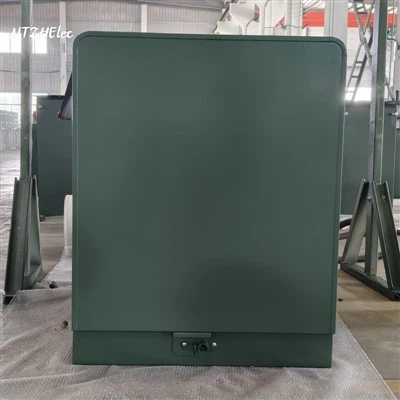
As a supplier of pole-mounted transformer oil tanks, I’ve had the privilege of delving deep into the world of these essential electrical components. One aspect that is often overlooked but is of utmost importance is the electrical properties of the oil within these tanks. In this blog, I’ll explore the key electrical properties of transformer oil, their significance, and how they impact the performance and reliability of pole-mounted transformers. Pole Mounted Transformer Oil Tank

Dielectric Strength
One of the most critical electrical properties of transformer oil is its dielectric strength. Dielectric strength refers to the ability of an insulating material to withstand an electric field without breaking down and conducting electricity. In the context of a pole-mounted transformer, the oil acts as an insulator between the various conductive parts, such as the windings.
A high dielectric strength is essential because it prevents electrical discharges, such as arcing, from occurring within the transformer. Arcing can cause significant damage to the transformer’s internal components, leading to reduced efficiency, increased maintenance costs, and even complete failure. The dielectric strength of transformer oil is typically measured in kilovolts per millimeter (kV/mm). Standard transformer oils usually have a dielectric strength of around 30 – 40 kV/mm. However, the requirements can vary depending on the specific application and design of the pole-mounted transformer.
Factors that can affect the dielectric strength of transformer oil include the presence of moisture, contaminants, and aging. Moisture is particularly problematic as it can significantly reduce the dielectric strength of the oil. Even a small amount of water can act as a conductor, increasing the likelihood of electrical breakdown. Contaminants, such as dirt and metal particles, can also create pathways for electrical current, compromising the insulating properties of the oil. Over time, the oil can also degrade due to oxidation and thermal stress, which can lead to a decrease in dielectric strength.
To maintain the dielectric strength of the oil in a pole-mounted transformer, regular testing and maintenance are crucial. This includes periodic oil sampling and analysis to detect any signs of moisture, contaminants, or degradation. If the dielectric strength is found to be below the acceptable level, measures such as oil filtration, drying, or replacement may be necessary.
Dissipation Factor
The dissipation factor, also known as the power factor, is another important electrical property of transformer oil. It measures the amount of electrical energy that is dissipated as heat when an alternating current (AC) is applied to the oil. A low dissipation factor indicates that the oil is a good insulator and that very little energy is being lost as heat.
In a pole-mounted transformer, a high dissipation factor can lead to several problems. Firstly, it results in increased energy losses, which can reduce the overall efficiency of the transformer. This not only wastes energy but can also lead to higher operating costs. Secondly, the heat generated due to a high dissipation factor can contribute to the aging and degradation of the oil and other internal components of the transformer. Over time, this can shorten the lifespan of the transformer and increase the risk of failure.
The dissipation factor of transformer oil is affected by several factors, including temperature, frequency, and the presence of polar contaminants. As the temperature increases, the dissipation factor typically also increases. This is because the molecules in the oil become more active at higher temperatures, leading to greater energy dissipation. Polar contaminants, such as acids and other chemical by – products of oil degradation, can also significantly increase the dissipation factor.
Regular monitoring of the dissipation factor is an important part of transformer maintenance. By tracking changes in the dissipation factor over time, operators can detect early signs of oil degradation or the presence of contaminants. If the dissipation factor exceeds the acceptable limits, appropriate actions can be taken, such as oil treatment or replacement.
Specific Resistance
The specific resistance, also known as resistivity, of transformer oil is a measure of its ability to resist the flow of electric current. It is an important property as it is closely related to the insulating performance of the oil. A high specific resistance indicates that the oil is a good insulator and that it will impede the flow of current between conductive parts within the transformer.
In a pole-mounted transformer, a low specific resistance can lead to increased leakage currents. Leakage currents not only waste energy but can also cause overheating and damage to the transformer’s insulation. This can ultimately lead to insulation breakdown and transformer failure.
The specific resistance of transformer oil can be influenced by factors such as temperature, moisture, and contaminants. As with the dissipation factor, temperature has a significant impact on specific resistance. Generally, the specific resistance decreases as the temperature increases. Moisture and contaminants can also lower the specific resistance by providing additional pathways for the flow of electric current.
To ensure the proper functioning of a pole – mounted transformer, it is essential to maintain a high specific resistance of the oil. Regular oil testing can help to monitor the specific resistance and detect any changes that may indicate a problem. If the specific resistance is found to be too low, steps can be taken to remove moisture and contaminants from the oil or to replace the oil altogether.
Breakdown Voltage
The breakdown voltage of transformer oil is the minimum voltage at which the oil loses its insulating properties and begins to conduct electricity. Once the breakdown voltage is reached, an electrical arc can form, which can cause severe damage to the transformer.
The breakdown voltage is closely related to the dielectric strength of the oil. However, it also takes into account other factors such as the geometry of the electrodes and the duration of the applied voltage. In a pole – mounted transformer, the breakdown voltage must be high enough to withstand the normal operating voltages and any transient overvoltages that may occur.
Several factors can affect the breakdown voltage of transformer oil. As mentioned earlier, moisture and contaminants can significantly reduce the breakdown voltage. The presence of gas bubbles in the oil can also lower the breakdown voltage, as gas is a poor insulator compared to the oil. Additionally, the age and condition of the oil can impact the breakdown voltage. As the oil ages, it becomes more susceptible to breakdown due to oxidation and the accumulation of degradation products.
To ensure the safety and reliability of a pole – mounted transformer, it is important to maintain an adequate breakdown voltage. This can be achieved through proper oil maintenance, including regular testing, filtration, and replacement as needed.
Importance of Maintaining the Electrical Properties of Transformer Oil
Maintaining the electrical properties of the oil in a pole – mounted transformer is crucial for several reasons. Firstly, it ensures the efficient operation of the transformer. By preventing electrical breakdown, minimizing energy losses, and reducing leakage currents, well – maintained transformer oil helps the transformer to convert electrical energy with high efficiency. This is not only beneficial for the power grid but also for end – users who rely on a stable and cost – effective supply of electricity.
Secondly, maintaining the electrical properties of the oil extends the lifespan of the transformer. By reducing the stress on internal components and preventing damage caused by electrical discharges and overheating, the transformer can operate reliably for a longer period of time. This reduces the need for frequent replacements, which can be costly and disruptive.
Finally, proper oil maintenance enhances the safety of the pole – mounted transformer. Electrical breakdowns and arcing can pose a significant safety hazard, not only to the transformer itself but also to nearby personnel and equipment. By ensuring that the oil has the appropriate electrical properties, the risk of such incidents can be minimized.
How Our Products Help
As a supplier of pole – mounted transformer oil tanks, we understand the importance of maintaining the electrical properties of the oil. Our oil tanks are designed with features that help to protect the oil and ensure its long – term performance.
Our tanks are made from high – quality materials that are resistant to corrosion and environmental damage. This helps to prevent contaminants from entering the oil and affecting its electrical properties. Additionally, our tanks are equipped with proper sealing mechanisms to prevent moisture ingress, which is one of the main factors that can degrade the oil.
We also offer a range of options for oil monitoring and maintenance. Our tanks can be fitted with sensors that allow for real – time monitoring of the oil’s electrical properties, such as dielectric strength and dissipation factor. This enables operators to detect any potential problems early and take appropriate action before they escalate.
Conclusion
The electrical properties of the oil in a pole – mounted transformer oil tank play a vital role in the performance, reliability, and safety of the transformer. From dielectric strength to breakdown voltage, each property must be carefully maintained to ensure optimal operation.
Transformer Radiator As a trusted supplier of pole – mounted transformer oil tanks, we are committed to providing products and solutions that help our customers maintain the electrical properties of their transformer oil. If you are in the market for high – quality pole – mounted transformer oil tanks or need more information about how to maintain the electrical properties of transformer oil, we invite you to contact us for a procurement discussion. We look forward to helping you meet your electrical infrastructure needs.
References
- Electrical Insulating Liquids – Mineral Oils for Transformers and Switchgear, International Electrotechnical Commission (IEC)
- Transformer Maintenance Guide, Institute of Electrical and Electronics Engineers (IEEE)
- Handbook of Transformer Technology, McGraw – Hill
Nantong Zhihe Electric Co., Ltd.
As one of the most professional pole mounted transformer oil tank manufacturers and suppliers in China, we’re featured by quality products and low price. Please rest assured to wholesale cheap pole mounted transformer oil tank made in China here from our factory. Customized orders are welcome.
Address: NO.202 Jianghai West Road, Hai’an Town, Hai’an City, Jiangsu Province
E-mail: colt.ntzh@gmail.com
WebSite: https://www.ntzhelectric.com/
