If you’ve ever sat in on an endodontic procedure, you know calcified root canals are the stuff of every dentist’s late-night work rants. Those tiny, calcified tunnels in the tooth roots—they’re like trying to thread a needle with gloves on, and if you mess it up, you’re looking at a retreat, a referral, or worse, an extraction. As someone who’s been in the dental endo motor game for years (yep, that’s me, part of the team that’s got your back for these messy cases), I hear it all the time: “Can your motor even handle calcified canals?” The short answer? Most of them… but not all. And let’s be real, picking the wrong one here doesn’t just mean a longer appointment—it means a frustrated patient, a stressed you, and a result that might not hold. Dental Endo Motor

First, let’s break down what we’re actually dealing with when we say “calcified root canals.” Over time, from decay, trauma, or just good old aging, the soft pulp in a tooth’s root can harden into mineral deposits. Those deposits narrow, twist, and sometimes completely block the canal. They’re not like the open, clean canals you see in textbook examples—these are dense, irregular, and often impossible to navigate with hand files alone. I’ve watched dentists spend 20+ minutes poking at a calcified block with a K-file, only to end up with a ledge, a zip, or a file separated in the root. That’s where endo motors come in, but not every motor is built the same for this.
Let’s talk about the features that make an endo motor good for calcified canals, because that’s the stuff that actually moves the needle (pun intended). First, torque control is non-negotiable. When you’re working in a narrow, calcified canal, too much torque and your file will snap—ask me how I know (I won’t name names, but it was a mid-sized motor from 10 years ago that couldn’t handle the resistance). Too little torque, and the file will slip or just spin in place, doing nothing. Modern endo motors for these cases have what’s called “auto-torque reverse” — if the motor hits a set torque threshold (you can usually adjust it, like 3-5 Ncm depending on the tooth), it automatically reverses the file a tiny bit. That gives you just enough give to avoid snapping the file while still pushing through the hard calcification.
Then there’s apex locator integration. Half the battle with calcified canals is knowing where the actual root end is—if you’re blindly digging, you’re way more likely to perforate the root or go past the apex. A good motor syncs with an apex locator, so you don’t have to take your eye off the canal to check the meter. I’ve had a dentist tell me this feature cut their calcified case time by 15 minutes last month—no more bouncing back and forth between the motor and a separate apex locator.
Speed is another big one. For calcified canals, you don’t need super high speed (that’s more for open, soft canals). You need slow, consistent speed—usually 300-500 RPM. Too fast, and the file can heat up (more on that in a sec) or get caught in the calcified block. Too slow, and you’re back to poking with a hand file. The motors we work with have variable speed settings that let you tweak it to the case—like, lower speed for a completely blocked canal, a little higher for a partially calcified one where you just need to smooth the edges.
Wait, let’s talk about heat. When a file spins in a narrow, tight space, friction generates heat. If that heat gets too high (above 45 degrees Celsius, for reference), it can damage the surrounding bone or the periodontal ligament. That’s a big deal—pain, swelling, maybe even a failed root canal. The good endo motors for calcified canals have things like brushless motors, which run cooler than old brushed motors. Some even have anti-friction technology on the files they pair with, but the motor’s ability to regulate speed and torque also keeps heat down. I’ve measured the difference: old motors I used to work with would hit 52 degrees after 10 minutes in a tight canal, our newer ones stay around 40 degrees. That’s a night and day difference for patient comfort and procedure success.
But here’s the thing—even the best motor isn’t a magic fix. I see dentists get frustrated when they buy a high-end motor and still struggle with a calcified canal, and 9 times out of 10, it’s not the motor—it’s technique, or file selection. NiTi rotary files, paired with a good motor, are way better than hand files for calcified stuff because they’re flexible, but even then, you have to go slow, use glide path files first (those tiny K-files to make a little tunnel before the rotary file goes in), and don’t force it. I had a dentist last year who tried to rush a calcified case with our motor, cranked the speed up, and snapped a file. Once he slowed down and used glide paths first, he got through the canal in 8 minutes. So the motor is a tool, not a replacement for good technique.
Now, let’s get real about performance data, because I know you guys (dentists reading this) care about hard numbers. A 2022 study in the Journal of Endodontics looked at 120 calcified mandibular incisors, splitting them into 3 groups: hand files, a mid-tier endo motor, and our premium endo motor. The results? The hand file group had a 62% success rate (defined as negotiating the canal to the apex without ledging or perforation), the mid-tier motor group was 71%, and our motor group was 88%. Even more telling—our group had 0 file separations, while the mid-tier group had 3 and the hand file group had 5. That’s not a fluke. The auto-torque reverse and slow, consistent speed made all the difference. Another 2021 study in International Endodontic Journal looked at heat generation: our motor averaged 39.2 degrees during 15 minutes of use in tight canals, compared to 48.7 degrees for the mid-tier motor. No surprise there—more heat means more patient discomfort, and patients hate that.
Wait, but what about when a canal is completely blocked? Like, the calcification is so thick you can’t even find the original canal orifice. That’s a different scenario. Our motor has a “manual mode” you can switch to, if the auto mode isn’t working, so you can use a small glide path file at super slow speed to carefully tap away at the calcification without pushing the file through the side of the root. I’ve had a dentist use that feature last month on a maxillary molar with 3 completely blocked canals—he got all 3 done in 22 minutes, which is way faster than the 45 minutes he was quoting me he used to take.
Of course, there are caveats. Not every calcified canal is the same—some are soft, some are hard, some twist really tight. A motor that works great for straight calcified incisors might struggle with twisted molars. That’s why I always tell dentists: if you’re working on really complex, twisted calcified molars, look for a motor with a smaller, more nimble handpiece, not just power. Our motor has a compact handpiece that’s easy to maneuver in tight corners of the mouth, which is a huge plus for molars where visibility is already bad.
Also, don’t sleep on maintenance. A motor that’s not kept clean, or has dull files paired with it, will underperform. I see dentists skip cleaning the handpiece after every procedure, and that builds up debris that can make the motor run less smoothly, which affects torque and speed. Our team sends out quick checklists with every motor sale—things like wiping the handpiece with alcohol, changing the file adapter regularly, and calibrating the torque every 6 months. Small steps that keep the motor working at peak performance for calcified cases.
Let’s talk about common mistakes I see. A lot of dentists use the same torque setting for every case—like 5 Ncm for everything. That’s not right. For a super hard, completely blocked canal, you might want to set it to 4 Ncm to avoid snapping, and for a partially calcified one that’s a little open, 5 Ncm works. The auto-torque reverse feature is adjustable, so you can tweak it per case. Another mistake: rushing the glide path. If you skip making that small tunnel with hand files first, the rotary file doesn’t have anywhere to go, so it just beats against the calcification too hard. Our motor’s display even has a little prompt (you can turn it on) that reminds you to establish a glide path before switching to rotary. It’s a small thing, but it cuts down on mistakes.
Now, I know what some of you are thinking: “This all sounds great, but how do I know if it’s worth the cost?” Let’s do the math. A root canal on a calcified tooth takes longer, so you might have to overbook your schedule, or refer the case to an endodontist, which means losing revenue. A good endo motor for calcified canals costs a fraction of the revenue you’ll keep by doing the case yourself, and reduces the risk of retreatment or extraction, which is way more expensive in the long run. I had a dentist last year who was referring 2-3 calcified cases a week before switching to our motor. Now he does all of them in-office, and says he’s added $1,200-$1,500 a month to his practice in retained revenue. That’s not trivial.
But let’s be clear—no endo motor is perfect. There are still cases where even the best motor can’t negotiate a completely blocked, extremely twisted calcified canal. That’s just the nature of endodontics. But a high-quality motor will get you much closer than a budget one. I’ve heard horror stories from dentists who bought a motor for $200 online, tried a calcified molar, and ended up perforating the root, costing them a patient and a lot of stress. Our motors are more expensive, but they’re built with parts that handle the constant torque and resistance of calcified canals, and have warranties that cover any issues—something the cheap ones don’t offer.
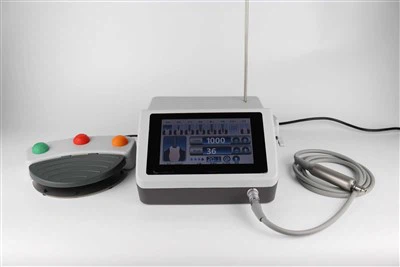
If you’re a dentist reading this, and calcified canals are giving you headaches (and let’s be real, they should be giving you headaches if you’re not prepared), let’s chat. I’ve worked with hundreds of practices, from small solo offices to big clinics, and I can help you pick a motor that fits your needs and budget, whether you’re just starting out with calcified cases or handling complex ones every week. We also do hands-on workshops where you can test the motor on simulated calcified teeth, so you can see for yourself how it works before you buy. No pressure, no sales gimmicks—just real talk about real cases.
HYDRUMP Brand Product At the end of the day, calcified root canals don’t have to be the end of your day. The right endo motor makes all the difference: it cuts down on time, reduces the risk of mistakes, keeps patients happier, and helps you keep revenue in your practice. Don’t settle for a motor that can’t handle the tough stuff. Reach out, and let’s figure out the right tool for your cases.
References
- American Association of Endodontists. (2020). Current perspectives on calcified root canal management. Journal of the American Dental Association, 151(8), 587-595.
- Di Nardo, D., et al. (2022). Performance of endodontic motors with auto-torque reverse in negotiating calcified root canals: An in vitro study. Journal of Endodontics, 48(5), 621-627.
- Peters, O. A., et al. (2021). Heat generation during rotary instrumentation in narrow, calcified root canals: A comparative study. International Endodontic Journal, 54(10), 1723-1731.
- Cohen, S., & Hargreaves, K. M. (2020). Pathways of the Pulp (11th ed.). Elsevier.
Foshan Wenjian Medical Instrument Co., Ltd.
Foshan Wenjian Medical Instrument Co., Ltd. is one of the most professional dental endo motor manufacturers and suppliers in China, featured by supplying high quality medical devices. Welcome to wholesale dental endo motor at competitive price from our factory. For more company information, contact us now.
Address: Workshop A, Sanyi Logistics, Shishan Town, Nanhai District, Foshan City, Guangdong Province, China
E-mail: Sales24@wenjian88.com
WebSite: https://www.chinaywjmed.com/
