If you’ve ever driven past a new residential subdivision or a commercial construction site, you’ve likely spotted stacks of exterior gypsum wall board (EWB) leaning against frame structures, bright white and seemingly unassuming. For my team, who’s spent a decade supplying this material to contractors and builders across the Midwest, we’ve long known it’s more than just a simple building panel—it’s a product with a tangible environmental footprint, one that’s evolved dramatically as the construction industry grapples with more sustainable practices. When a local architect recently asked us to walk through that footprint, I realized this is a topic too many in our space take for granted. Let’s break down the environmental impacts of EWB production, straight from the supplier’s workshop. Exterior Gypsum Wall Board
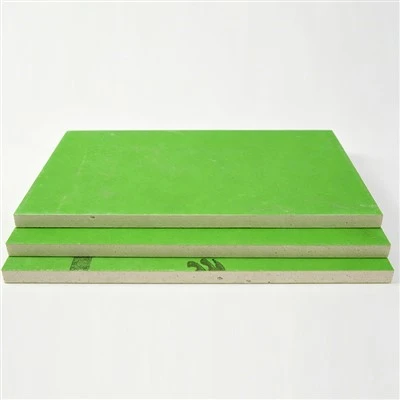
First, it’s important to clarify what exterior gypsum wall board is, because that distinction shapes its impacts. Unlike interior drywall, which only needs to resist minor moisture fluctuations, EWB is engineered to stand up to outdoor conditions: rain, snow, temperature swings, and occasional UV exposure. Its core is mostly gypsum, a soft sulfate mineral, but it’s layered with water-resistant paper, treated with additives like flame retardants and mold inhibitors, and sometimes reinforced with fiberglass or other materials for extra durability. That extra engineering means its production has unique environmental touches compared to interior drywall.
Let’s start with the biggest input: gypsum itself. Most EWB producers source raw gypsum from two places: natural mining and recycled gypsum, often called “post-consumer” or “post-industrial” material. Historically, natural gypsum mining was the primary source, and that comes with its own set of challenges. Gypsum is found in sedimentary rock deposits, usually mined via open-pit operations. In the U.S., some of the largest natural gypsum mines are in places like Iowa and Texas, where the flat farmland gives way to giant pits. When I visited a mine in southern Iowa a few years back, the mine manager explained that reclamation is non-negotiable here—operators have to restore the land after mining, grading slopes, replacing topsoil, and planting native grasses. But open-pit mining still displaces wildlife, disrupts local hydrology (gypsum deposits are often near groundwater aquifers, and runoff from mining sites can carry sediment and small amounts of heavy metals into streams), and uses massive amounts of energy to extract and transport the rock. A 2022 study from the Gypsum Association, a trade group I’ve worked with for years, found that natural gypsum mining accounts for roughly 12% of the total carbon emissions from EWB production, mostly from the diesel used in heavy mining equipment and haul trucks.
That’s where recycled gypsum comes in, and it’s a game-changer for our industry. A lot of builders tear out old drywall during renovations or demo, and not all of it is contaminated enough to be thrown in landfills. My team works with a local recycling center that collects post-industrial gypsum from construction sites and post-consumer material from residential renovations, processing it to remove the paper backing, nails, and any mold or residue. When we switched to using 40% recycled gypsum in our EWB production three years ago, we cut our raw material-related carbon emissions by almost a third, according to our internal sustainability report. But even recycled gypsum has a catch: processing it requires energy to crush and mill, and if not sorted correctly, it can carry contaminants like paint, wood, or plastic that ruin entire batches. That’s why reliable partners like the recycling center we work with are critical—bad sorting not only wastes material but increases energy use, making the recycled supply chain’s footprint almost as high as natural gypsum if not managed well.
Next, the biggest energy hog in EWB production: the calcination phase. Gypsum’s raw form is calcium sulfate dihydrate, which has two molecules of water bound to it. To make wall board, you have to heat the gypsum to roughly 150°C (300°F) to drive off that water, turning it into calcium sulfate hemihydrate—what’s commonly called “plaster of Paris.” That calcination step is where the vast majority of EWB’s carbon emissions come from, about 60% of total production emissions, per that 2022 Gypsum Association study. For decades, most producers used fossil fuels like coal or natural gas to heat calcination kilns. But in the last 10 years, more and more facilities have switched to natural gas, and a handful (including our production partners in Ohio) have shifted to biomass, using wood waste from lumber mills as fuel. That cut calcination emissions by about 25% for those facilities. The problem? Even with those improvements, calcination still requires a lot of heat. Each ton of EWB produced needs roughly 1.2 million BTUs of energy, and while that’s less than some other building materials (like cement, which uses 10 times that per ton), it’s still a major point of focus for our industry. I’ve sat in on multiple trade group meetings where we’re testing solar-powered kiln pre-heaters, which use captured solar heat to warm raw gypsum before it goes into the main kiln—early trials show that could cut calcination emissions by another 15% within the next five years.
Then there’s the paper backing, a key part of EWB’s performance and its environmental impact. Unlike interior drywall, which uses plain paper, EWB uses water-resistant, often recycled paper that’s treated with chemicals to repel moisture and resist mold. Making that paper requires pulping wood fibers, which uses water and energy, and the treatments (like waxes or acrylic coatings) add to the material’s footprint. The good news is that most EWB paper now uses recycled fiber—our product uses 70% post-consumer and post-industrial paper backing, which reduces the need for virgin timber. But the chemical treatments are a sticking point: some older EWB products use volatile organic compounds (VOCs) in their coatings, which can off-gas after installation, and those chemicals can also be problematic if the paper is disposed of in a landfill, since they can leach into groundwater. That’s why our team worked with our manufacturer last year to switch to water-based, low-VOC coatings for our EWB, which not only meets EPA standards for indoor air quality but also means the paper is easier to recycle at the end of the panel’s life.
Waste is another environmental impact we can’t ignore, even after production. For a long time, EWB waste was mostly sent to landfills, where it’s a problem because gypsum can release hydrogen sulfide gas as it breaks down in anaerobic (oxygen-free) conditions—same as rotting food or sewage. That gas is toxic in high concentrations and contributes to air pollution. But more recently, construction and demolition waste programs have started recycling EWB at much higher rates. The EPA’s 2021 Construction Materials Recycling Report found that EWB recycling rates in the U.S. went from 10% in 2010 to 52% in 2020, thanks in part to programs that separate EWB from other debris at job sites. As a supplier, we’ve started offering our customers a take-back program for any unused EWB they have at the end of a project—we partner with a regional recycling facility that grinds it up and sells it as a soil amendment for farmers, since gypsum adds calcium and sulfur to soil and improves drainage. It’s a small step, but we’ve kept over 200 tons of EWB out of landfills since we launched that program two years ago.
There are also less talked-about environmental impacts, like water use. EWB production requires a lot of water: for mixing the gypsum slurry, cooling kilns, and cleaning equipment. A single ton of EWB uses roughly 50 gallons of water, per the Gypsum Association. Historically, most producers would pump water from local rivers or aquifers, but that can strain water supplies in dry regions—like the Southwest, where I’ve seen production facilities install water recycling systems that capture and reuse 90% of their process water. Our production partners in Pennsylvania do this, and they’ve cut their local water use by 80% since 2018. The downside? Even with recycling, the chemicals in EWB (like the mold inhibitors) can contaminate water if not treated properly, so facilities have to have strict water filtration systems to remove those chemicals before releasing any runoff.
Now, it’s worth noting that EWB is actually more sustainable than many alternative exterior wall products, especially when you look at the full lifecycle. For example, fiber cement siding has a higher carbon footprint during production, and it’s heavier, so it requires more fuel to transport. Vinyl siding releases VOCs during manufacturing and can take decades to break down. EWB, on the other hand, is lightweight, easy to install, and has a long lifespan—properly installed exterior gypsum wall board can last 50 years or more if maintained, which means less waste over time. That’s why we still choose EWB for most of our projects, even with its production impacts.
The construction industry is moving fast toward more sustainable materials, and our team is right there with it. We’re testing a new line of EWB that uses 100% recycled gypsum and paper backing, powered by 100% renewable energy in production. The only challenge right now is scaling up the recycled supply—there’s only so much post-consumer gypsum available, so we’re working with demolition companies to create better sorting processes that can capture more material. We’re also working with local farmers to source some of the additives we use, replacing synthetic mold inhibitors with natural, plant-based alternatives that have a lower environmental footprint.

If you’re a builder, contractor, or project manager looking for a reliable EWB supplier that prioritizes transparency about these impacts, we’re here to walk through your project’s needs, talk about sustainable product options, and answer any questions you have. We believe that building materials should be both high-performing for your projects and kind to the planet, and we’re committed to updating our practices as new technologies and data emerge. We’d love to connect with you to discuss your next construction project and how our EWB can fit your needs.
Interior Gypsum Wall Board References
Gypsum Association. (2022). Life Cycle Assessment of Exterior Gypsum Wall Board Production. Gypsum Association Press.
U.S. Environmental Protection Agency. (2021). Construction and Demolition Materials Recycling Report. EPA Office of Sustainable Materials Management.
National Ready Mixed Concrete Association. (2020). Comparative Lifecycle Analysis of Building Materials. NRMCA Publications.
Shandong Hongyuanli Building Materials Co., Ltd.
We are one of the most professional exterior gypsum wall board manufacturers in China, also support customized service. With abundant experience, we warmly welcome you to buy high quality exterior gypsum wall board for sale here from our factory. Contact us for more details.
Address: NORTH YOON VILLAGE, HUYANG TOWN, FEI COUNTY, SHANDONG PROVINCE, CHINA
E-mail: admin@hylgypsum.com
WebSite: https://www.hylgypsum.com/
