In the world of industrial manufacturing, the question of whether a tunnel kiln can be used for firing glass products is one that often arises. As a tunnel kiln supplier, I’ve encountered numerous inquiries from clients looking to expand their production capabilities or optimize their existing processes. In this blog post, I’ll delve into the feasibility of using tunnel kilns for glass firing, exploring the technical aspects, advantages, and potential challenges. Tunnel Kiln
Technical Feasibility
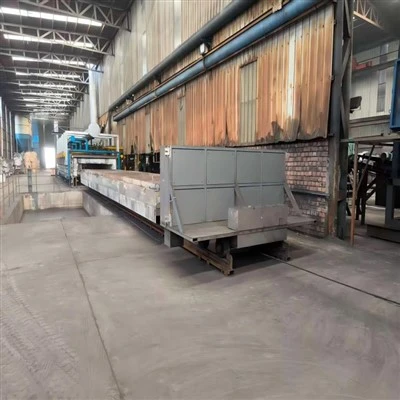
From a technical perspective, tunnel kilns can indeed be used for firing glass products. These kilns are continuous furnaces that operate on a conveyor system, allowing a steady flow of products through different temperature zones. The key to successful glass firing in a tunnel kiln lies in understanding the unique properties of glass and tailoring the kiln’s design and operation accordingly.
Glass is a complex material, and its behavior during the firing process is highly dependent on factors such as composition, thickness, and shape. Different types of glass, such as soda – lime glass, borosilicate glass, and lead glass, have distinct melting and annealing points. For example, soda – lime glass typically begins to soften at around 550 – 600°C and reaches its working range at 700 – 900°C, while borosilicate glass has a higher softening point, around 820°C.
A well – designed tunnel kiln can be equipped with precise temperature control systems to accommodate these variations. Multiple heating zones are installed along the length of the kiln, each with its own set of heating elements and temperature sensors. This allows for a gradual increase in temperature as the glass products move through the kiln, ensuring a uniform and controlled heating process.
Advantages of Using Tunnel Kilns for Glass Firing
One of the primary advantages of using a tunnel kiln for glass firing is the high level of automation and efficiency it offers. Unlike batch kilns, which require manual loading and unloading after each firing cycle, tunnel kilns operate continuously. This means that glass products can be fired in large quantities with minimal downtime, resulting in increased production rates and reduced labor costs.
The continuous operation of a tunnel kiln also provides better control over the firing process. The temperature profiles can be precisely adjusted and maintained, leading to consistent product quality. This is particularly important for glass products that require specific physical and optical properties, such as clear glassware or glass lenses.
Energy efficiency is another significant benefit. Tunnel kilns are designed to minimize heat loss by using insulating materials and recovering waste heat. The pre – heating and cooling zones of the kiln can be optimized to transfer heat from the hot end to the cold end, reducing the overall energy consumption. Additionally, the continuous nature of the process allows for more efficient use of fuel or electricity, as the kiln operates at a steady state.
Design Considerations for Glass Firing in Tunnel Kilns
When designing a tunnel kiln for glass firing, several factors need to be taken into account. The first is the size and shape of the glass products. Kilns need to be designed with appropriate dimensions to accommodate the various sizes of glass, whether it’s small glass beads or large sheets of glass. The conveyor system also needs to be carefully selected to ensure smooth transportation of the glass products through the kiln without causing any damage.
The atmosphere inside the kiln is another critical factor. Glass can react with the surrounding gases during the firing process, which can affect its appearance and properties. For some types of glass, such as those with a high content of lead or certain additives, a controlled atmosphere with low oxygen levels may be required to prevent oxidation. Special gas injection systems can be installed in the kiln to maintain the desired atmosphere.
The heating elements should be chosen based on the specific requirements of the glass firing process. Electric heating elements are often preferred for their precise temperature control and clean operation. However, gas – fired heating elements can also be used, especially for large – scale production, due to their high heat output and cost – effectiveness.
Challenges and Solutions
While tunnel kilns offer many advantages for glass firing, there are also some challenges that need to be addressed. One of the main challenges is the potential for thermal shock. Glass is a brittle material, and rapid changes in temperature can cause cracking or shattering. To mitigate this, the heating and cooling rates in the kiln need to be carefully controlled. Gradual temperature ramps can be implemented in the pre – heating and cooling zones to minimize thermal stress on the glass products.
Another challenge is the risk of surface contamination. During the firing process, dust or other particles in the kiln atmosphere can adhere to the glass surface, affecting its clarity and appearance. To prevent this, proper air filtration systems can be installed in the kiln to keep the atmosphere clean. Regular maintenance of the kiln, including cleaning of the conveyor and heating elements, is also essential to ensure a dust – free environment.
Quality Assurance and Control
Ensuring the quality of glass products fired in a tunnel kiln requires a comprehensive quality assurance and control system. This includes regular monitoring of the temperature, atmosphere, and conveyor speed in the kiln. Data loggers can be used to record and analyze the process variables, allowing for timely adjustments if necessary.
In – process inspections should also be carried out to check for any defects in the glass products, such as cracks, bubbles, or uneven surfaces. Sampling techniques can be used to test the physical and optical properties of the glass, such as hardness, refractive index, and transparency. Based on the test results, the firing process can be optimized to meet the desired quality standards.
Case Studies
To illustrate the practical application of tunnel kilns for glass firing, let’s look at a few case studies. In a large – scale glassware manufacturing plant, a tunnel kiln was installed to replace the traditional batch kilns. The new tunnel kiln allowed the plant to increase its production capacity by 30% while reducing energy consumption by 20%. The consistent temperature control in the tunnel kiln also improved the quality of the glassware, resulting in fewer rejects and higher customer satisfaction.
In another case, a specialty glass manufacturer used a tunnel kiln to fire glass lenses for optical applications. The kiln was designed with a precise temperature profile and a controlled atmosphere to ensure the optical clarity and accuracy of the lenses. By using the tunnel kiln, the manufacturer was able to produce high – quality lenses at a faster rate, meeting the growing demand in the market.
Conclusion
In conclusion, a tunnel kiln can be effectively used for firing glass products. With proper design, operation, and quality control, it offers numerous advantages in terms of efficiency, product quality, and energy savings. However, it’s important to understand the specific requirements of glass firing and address the associated challenges to ensure successful implementation.
Brick Tunnel Kiln If you’re considering using a tunnel kiln for your glass production or looking to upgrade your existing firing system, I encourage you to contact me for further information and to discuss how we can tailor a tunnel kiln solution to meet your specific needs. I’m confident that our expertise and experience as a tunnel kiln supplier can help you optimize your glass firing process and achieve your production goals.
References
- Schneider, H., & Potter, R. (2006). Glass Science and Technology. Wiley.
- Nolan, D. C. (2007). Handbook of Industrial Drying. CRC Press.
- Hlavacek, V., & Hofman, Z. (2014). Chemical Reaction Engineering IV. Elsevier.
Henan Yaxin Kiln Co., Ltd.
Henan Yaxin Kiln Co., Ltd. is one of the most professional tunnel kiln manufacturers and suppliers in China. With abundant experience, we warmly welcome you to buy high quality tunnel kiln with the latest design from our factory. Good service and punctual delivery are available.
Address: Jixian Industrial Zone, Shangqiu City, Henan Province
E-mail: 1543563178@qq.com
WebSite: https://www.hnyxkiln.com/
