Hey there! I’m in the xanthate supply business, and I often get asked about what’s the deal with xanthate action. So, I thought I’d break it down in plain English. Or should I say, as plain as possible when you’re talking about some pretty technical chemical stuff. Xanthate
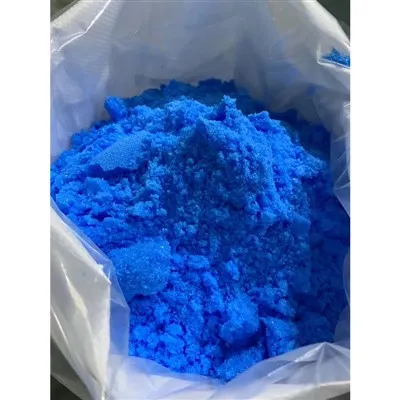
Let’s start with the basics. Xanthates are a group of organosulfur compounds. They’ve got a special chemical structure, which is like the key to how they work. The general formula for xanthates is RO – CS₂⁻M⁺, where R is an alkyl or aryl group, and M is usually a metal like sodium or potassium. That metal thing’s important; we’ll get back to it.
Now, xanthates are major players in the mining industry. Their main gig is froth flotation, which is a technique used to separate different minerals from each other. Picture a big, churning tank filled with water, ore, and some chemicals – including xanthates. The ore is basically a mix of the valuable minerals you want, and all the other stuff you don’t care about (which we call gangue).
So, how do xanthates help in this process? Well, it all boils down to their chemical properties. See, xanthates are polar molecules. That means one part of the molecule has a bit of a positive charge, and the other part has a negative charge. This polarity gives them some unique behavior when they interact with other substances.
Let’s talk about the reaction mechanism. When xanthates are added to the flotation tank, they first react with the metal ions on the surface of the valuable minerals. Remember that metal part in the xanthate formula? It can swap places with the metal ions on the mineral surface through a process called ion exchange. For example, if we’ve got a copper – bearing mineral and sodium xanthate, the sodium in the xanthate can be replaced by copper. This forms a metal xanthate complex on the mineral surface.
This complex is super important because it changes the surface properties of the mineral. Before the xanthate treatment, the mineral surface is hydrophilic, which means it likes water. But when the metal xanthate complex forms, the surface becomes hydrophobic, or water – hating. This is a game – changer in the flotation process.
Now, we add some air bubbles to the tank. These hydrophobic mineral particles with the xanthate complex on their surface attach themselves to the air bubbles. The bubbles then rise to the top of the tank, carrying the valuable minerals with them. Meanwhile, the gangue, which is still hydrophilic, stays in the water at the bottom. This way, we can easily separate the good stuff from the bad.
But it’s not just about the ion exchange. There are also other factors at play. The chain length of the alkyl or aryl group (the R in the formula) in the xanthate can affect its performance. Longer chain xanthates tend to be more hydrophobic, which can make the mineral particles even more likely to stick to the air bubbles. However, they can also be a bit more difficult to dissolve in water, so it’s a bit of a balancing act.
The pH of the flotation pulp (that’s the mixture of ore, water, and chemicals in the tank) is another crucial factor. Different minerals require different pH levels for the xanthate to work effectively. For example, some sulfide minerals work best in a slightly alkaline environment. If the pH is too high or too low, the xanthate might not react properly with the mineral surface, and the flotation process won’t be as efficient.
Temperature also matters. In general, higher temperatures can speed up the chemical reactions between the xanthate and the mineral. But if it gets too hot, the xanthate might start to break down, and that’s not good for the flotation process.
Xanthates also have some applications outside of mining. In the rubber industry, they’re used as accelerators in the vulcanization process. Vulcanization is what makes rubber stronger and more durable. The xanthate helps speed up the reaction between the rubber molecules and the sulfur, which cross – links the molecules and gives the rubber its desirable properties.
Another interesting use is in the synthesis of organic compounds. They can be used as intermediates in the production of various chemicals. For example, they can react with certain halogenated compounds to form new carbon – sulfur bonds, which is a key step in making some important industrial chemicals.
Okay, so that’s a rundown of the mechanism of xanthate action. As a xanthate supplier, I know how important it is to understand this stuff. It helps us provide the right products to our customers. Different mining operations might need different types of xanthates depending on the minerals they’re trying to extract, the pH of their pulp, and other factors.
If you’re in the mining, rubber, or chemical industry and you think you might need xanthates, I’d love to have a chat. Whether you’re looking for advice on which type of xanthate is best for your process or you’re ready to start a purchase, I’m here to help. Just reach out, and we can start a discussion about how xanthates can work for you.
Xanthate References:
- "Flotation Chemistry" by J. S. Laskowski
- "Organosulfur Chemistry" by C. A. Ramsden
- Industry – specific research papers on xanthate applications in mining and rubber industries.
Bitop Bihope Qingdao Mining Co., Ltd
Bitop Bihope Qingdao Mining Co., Ltd. is one of the most professional xanthate manufacturers and suppliers in China, featured by quality products and low price. Please rest assured to buy discount xanthate in stock here and get quotation from our factory. Customized orders are welcome.
Address: Room 410, 4th Floor, Shengquan Business Building, No. 263 Yitong Road, Huangdao District, Qingdao City, Shandong Province, China
E-mail: btbhmining@163.com
WebSite: https://www.btbhmining.com/
